

As we celebrate the life and service of Martin Luther King, Jr, it seemed fitting to explore a chilling event from the pre-Civil Rights era that changed forever the life of the Black woman who half-raised me. Thanks always for reading, and have a safe, restful weekend—Martha
“There was an incident,” Mary began. “We don’t know exactly what happened, if somebody lied or they didn’t like Daddy … or, if it was just that he was a Black man.”
“Oh gosh,” I whispered, a reflex. I shuffled the papers in my lap, crossed and uncrossed my legs on the couch. Or, if it was just that he was a Black man—the phrase alone made me shiver.
Mary blinked and tightened her lips. I leaned forward, eager to listen even as part of me shrank away, like a skittish child working up to jump into cold water on a spring day.
“Maybe they thought he said something somehow or another to a white lady in that small town,” she went on. “But Mr. Abe got word of what was being planned against my Daddy.”
Abe Goldstein, she meant, one of the merchants who in the 1930’s employed Jimmie Lee Cochran as a chauffeur and a porter, a term for workers who did heavy lifting and performed janitorial duties.
“Do you know what was being planned?” I blurted, worrying even as I spoke that to give voice to the details might bring Mary pain.
“You can be pretty sure they were going to hang him,” she said, her gaze steely, her voice resolute. “They were going to hang him,” she repeated as if now that I’d asked, the long dormant outrage at this nearly eighty-year old threat had only grown stronger.
I set down my pen, my fingers gone numb.
“I don’t know all the details, but one thing was for sure,” Mary continued, her tone gentler. “Abe got word and he came out to the house and woke them up in the night. He told Daddy, ‘Get in the car. Get in the back seat and lay on the floor. Don’t move.’”
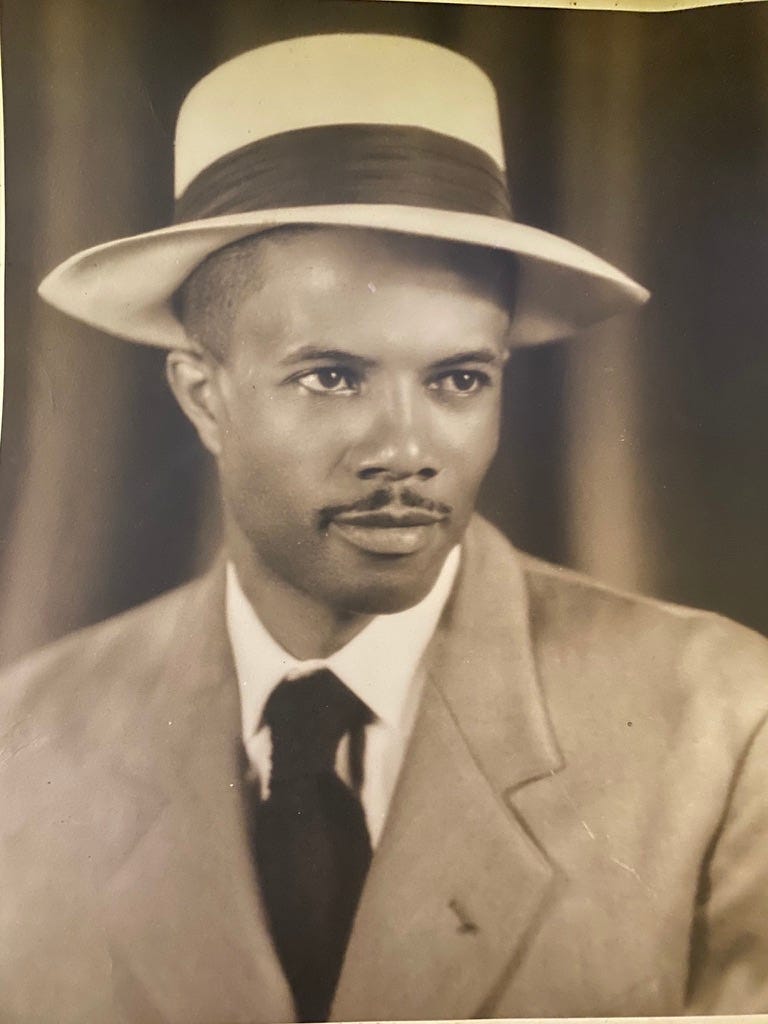
Whatever he’d gotten word of, Abe Goldstein understood that Jimmie Lee was in danger so grave that he had no choice but to leave behind his wife, his children, his home. With Jimmie Lee safely in his car, Abe drove out of Hurtsboro and over the Alabama line into Georgia. It was an eerie sort of reversal. Countless times they’d travelled this route with Jimmie Lee at the wheel. Countless times Abe, sometimes with a friend or associate along, talked business in the back as the miles rumbled out behind them en route to cities like Columbus and Atlanta. Once there, Jimmie Lee would wait outside like a proper chauffeur while they roamed wholesale marketplaces and bought supplies to sell in their shops. On this trip, there would have been no idle chatter, no how’s the family or it’s hot as the dickens today, only a hissing silence, maybe the panicked murmurings of a heated rush to elude the men who wanted Jimmie Lee dead.
It’s dizzying to think of Mary’s father lying cramped on the back seat floor, his skin filmed with road dust and the stink of gas fumes in his nose. I’ve never known the brand of raw fear he must have felt, fear that clogged his senses, pounded through his brain with every thump of the tires over asphalt. Would he ever see his family again? Would he live to see another sunrise? Maybe, likely, he felt something else, too: Fury, and rightly so. How could it have come to this? He was a man devoted to his family, proud of what he’d achieved in his young life, a husband and father who worked hard in both the cotton fields and the shops he kept organized and clean, a man who was doing all he could to keep his family afloat during the treacherous Jim Crow era. And for all that, he’d been laid low, literally, crouched and hidden in a posture his ancestors knew all too well, muscles coiled tight and unmoving lest he risk losing his life, his only hope for survival the kindness of a white man.
I had so many questions, not only what could Mary’s father have been accused of that led to this, but when exactly did it happen? And after, did the law in Hurtsboro investigate? How old was Mary? Could she remember waking up to find her father gone? And her mother … How did she, and Mary’s aunt, and her father’s mother and grandmother react to what must have been the most terrifying night of their lives?
Mary lowered her eyes and gave a slight shake of her head.
“We don’t know why, what, or exactly when, but I know it happened. This was what my Aunt Louise told us, and later, my Daddy, too.”
The known details were few, but the fact of it was true. Mary’s aunt, her paternal great-grandmother, who could not read or write, and her Grandmother Ellen, who could but chose not to record in writing the saga of her son’s near-lynching, passed along the story. And years later when they were reunited, Mary’s father confirmed what these women had told her. Mary must have been very young to have no memory of such a seminal event, probably younger than four or five when her father was forced out of his home and spirited away. If so, he would have been at the outside twenty-five years old.
Jimmie Lee’s narrow escape haunted me for days, weeks. The questions surrounding it cycled through my brain on an endless loop. Somehow even the ambiguity of it seemed cruel—it gave the story the quality of a tall tale when it deserved the weight of truth. I kept wondering why even when Mary was an adult, her father and the women in her life remained so tight-lipped. It’s possible they knew as little as they claimed to, but eventually I came to understand that even had they known more, for them to pass on anything but the bare bones of the incident might have put other lives in danger, including their own. Had Mary’s mother, or her Aunt Louise, pointed a finger or made a fuss, then whoever had been out to get Jimmie Lee might well threaten his family, even his children.
Men and women who aided those under threat of mob violence or exposed the guilty, even those who stood up against white supremacy, were often threatened for their efforts, and sometimes killed. Brazen examples came to pass during the Civil Rights Movement. In 1964, three young activists who had worked to register Black citizens to vote in Mississippi were abducted, shot, and buried in an earthen dam by members of the Ku Klux Klan. During the Selma marches of 1965, Viola Liuzzo was shot to death for transporting Black marchers back to their home town. And all but one of these four victims were white. Needless to say, Mary’s family knew this much after years of living in the small-town South: Best to leave well enough alone, now and forever.
Jimmie Lee’s employers, Jewish white men, risked retaliation themselves by helping him flee. They did it anyway. They were courageous men of integrity, just as Mary always described them.
I learned about Jimmie Lee’s brush with violent death while researching a novel set in Atlanta and a small north Georgia town, a saga that follows the lives of two close-knit families—one Black, one white—over the course of the 20th century. It felt strange, almost uncanny, to hear Mary’s story in parallel step with my research, which turned up plenty of violence and more than a few lynchings. Such a charged word, lynching, it’s worth defining—Brittanica online describes it as “a form of violence in which a mob, under the pretext of administering justice without trial, executes a presumed offender, often after inflicting torture and corporal mutilation.” According to the NAACP, there were 4,743 known lynchings in the US between 1882 and 1968, and of these, 531 took place in Georgia alone. Fulton County, which includes most of my home city of Atlanta, saw thirty-six of Georgia’s known lynchings. More than two-thirds of these took place during the 1906 Atlanta Race Massacre, a horrific, three-day event that I, a third generation Atlantan, had never heard of until doing this research. Dozens of Black lives were lost to a white mob of over 5,000 armed men who raged through downtown in the dripping heat of September. Not a single mob member was arrested, much less prosecuted. They got off scot free, unnamed and unaccounted for. Which was pretty much the way these things went (and sometimes still do today). After a lynching, official documents, if there were any, typically declared that a murder had been committed “by parties unknown,” even in cases, most cases, where the parties were very much known. “By parties unknown” became a euphemism for lynching and was used to signal that the crime would not be investigated, case closed. A lynching-averted like Jimmie Lee’s wouldn’t have earned even this kind of sketchy documentation.
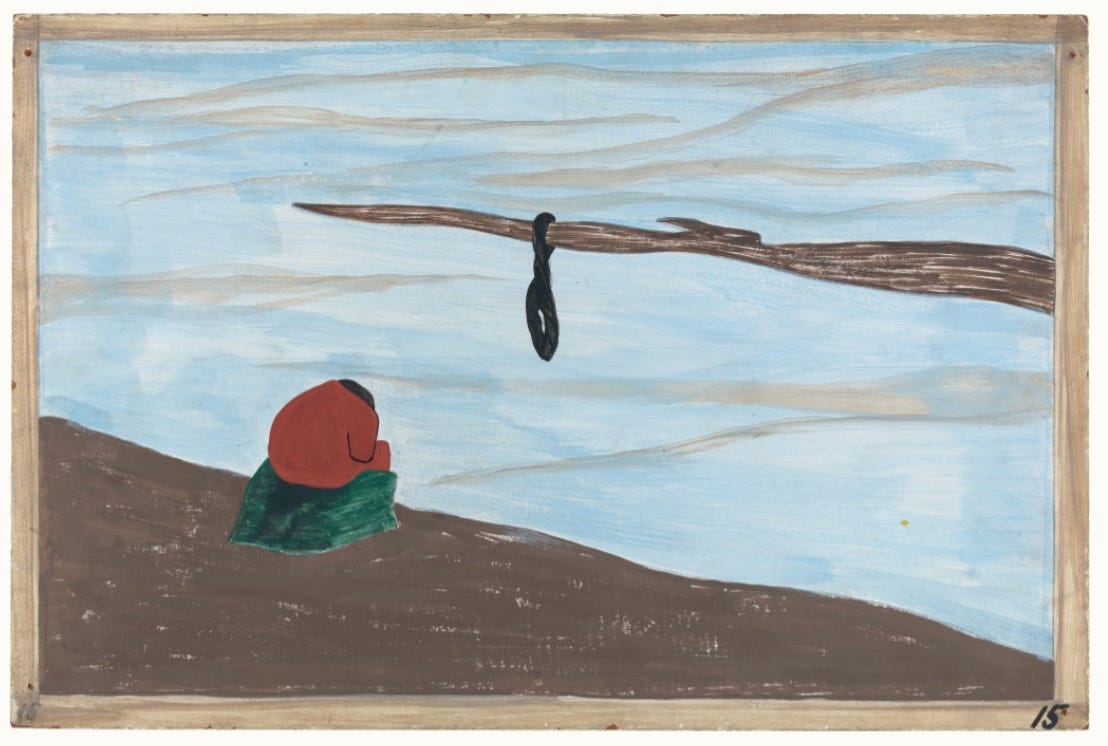
The helpless terror felt by these long-dead victims I read about now had a face, a face close and dear to someone I loved. Even if Mary and her family seemed resigned to settle for the bits they knew, I wanted more. It was 2017, the heart of the information age. Surely there was more. Surely it was worth a search. I started with Abe Goldstein and Jimmie Lee’s other employer, Sol Perlman. I found them well-documented in Ancestry.com. Abe was born in Poland in 1876, Sol in Alabama in 1901 to parents born in Lithuania. Both are listed in censuses as proprietors of dry goods stores in Hurtsboro. Both married, had children, and found success as immigrant families—all interesting information that I skimmed quickly past. What I needed was a living descendant, a fellow genealogist, amateur or otherwise, who might remember the night Jimmie Lee Cochran was forced to leave town.
I searched for public family trees that included an Abe Goldstein or a Sol Perlman, and found thousands. Using information gleaned from censuses and other documents, I weeded through and finally came up with an active Ancestry member whose data suggested he could be a descendant of Sol’s. I typed out a private message. The next day, he wrote back. My heart raced as I clicked open his reply:
Hi Martha,
My father owned a dry goods store and Jimmy Lee was a chauffeur and also helped in the store. My parents thought so highly of Jimmy Lee.
I remember vividly hearing about Jimmy Lee’s having to leave Hurtsboro suddenly and my Dad helping him do this. I will be happy to talk to you.Sincerely,
Sam Perlman
I exhaled. I felt relief, excitement, even a little trepidation. What if what I was about to uncover didn’t jive with Mary’s story? Time would have to tell. Sam was open and frank, his information invaluable. I look forward to sharing his family’s side of the story in the next installment of “Afternoons with Mary.”
My posts are free, but I’m ever grateful for my paid subscribers, whose generosity helps support my writing and publishing efforts. If a paid subscription isn’t your thing but you’d like to make a small, one-time donation, just click here. Above all, thank you for pausing your day to give me a read.
I’m good. Keep the stories ciming
This story brought me to tears😥. It made me think about sitting in the African American History class of Dr. Benjamin Quarles at Morgan. He was an outstanding teacher, who shared many stories about racist acts of violence against Black people; including lynchings. But nothing that he shared moved me to tears. His stories made me angry, and militant-minded; it was the 60’s and the Black Power movement. Your telling of someone story that you knew made it real for me. Thank you for sharing ❤️